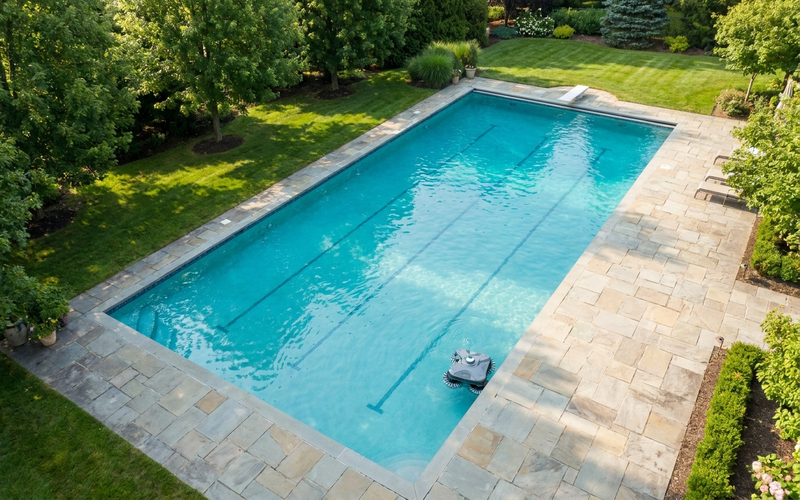
A robotic pool cleaner can make pool care much easier. It can reduce manual work, improve cleaning consistency, and help owners spend less time chasing dirt around the pool. But even a good cleaner can disappoint if it is not sized well for the pool it is supposed to maintain.
Many owners focus on features first. They compare runtime, filtration, navigation, and whether the unit is corded or cordless. Those points matter, but one basic issue often gets missed. Is the cleaner actually suited to the size of the pool?
When a robotic pool cleaner is too small for the pool it cleans, the problem does not always look dramatic at first. The cleaner still runs. It may still pick up dirt. It may even seem fine for the first few uses. Over time, though, the same issues begin to repeat. Certain areas stay dirty. Debris returns too quickly. Cleaning takes longer than expected. Owners start to feel like the machine is always working, but the pool never quite stays clean enough.
That is usually the point where sizing needs to be considered more seriously.
Why Pool Size Affects Cleaning More Than Many Owners Expect
Pool size changes the cleaning job in several ways. A larger pool has more floor area, more wall area, and often more places where debris can settle. It may also have a more complex shape, deeper sections, longer transitions, or more features that interrupt the cleaner’s path.
A cleaner designed for a smaller or simpler pool may still move through a larger one. But that does not mean it is covering the space efficiently.
Bigger Pools Need More Than Basic Reach
A large pool is not only about distance. It is also about workload. The cleaner needs enough time, enough debris capacity, and enough practical coverage to handle what the pool collects during normal use.
If the pool is big, but the cleaner has a small working range or short effective cycle, it may never fully catch up. Instead, it keeps managing part of the mess while the rest continues to build.
Pool Use Makes the Size Problem Worse
A lightly used pool and a busy family pool are not the same. A cleaner that feels acceptable in a quiet setting may feel too small once the pool gets regular swimmers, wind exposure, nearby trees, or frequent debris.
That is why size should never be judged in isolation. It should be judged in the context of actual use.
One Clear Sign Is That the Pool Never Feels Fully Caught Up
This is often the first real clue. The cleaner runs often, but the pool still feels like it is always one step away from being clean.
The Cleaner Improves the Pool but Does Not Stabilize It
If the pool looks slightly better after each cycle but never stays in a good condition for long, the cleaner may be undersized for the total job. This usually means it is removing some debris but not enough to control the pool as a whole.
Owners may notice:
- recurring dirt on the floor
- the same zones staying dusty
- debris building up again too quickly
- a constant feeling of incomplete cleanup
This is not always a sign of poor quality. It is often a sign that the cleaner is working beyond its practical range.
Frequent Use Does Not Fix the Underlying Mismatch
Some owners respond by running the cleaner more often. That may help temporarily, but if the unit is too small, the problem usually returns. The pool improves, then slips back again because the machine is doing near-maximum effort just to stay somewhat useful.
Another Sign Is That It Takes Too Many Cycles to Finish the Job
Large pools often need more than one cleaning cycle from time to time. That alone is not unusual. But there is a difference between occasional extra cleaning and needing repeated cycles just to get through normal maintenance.
Regular Cleaning Should Not Feel Endless
If one normal cleanup turns into two or three back-to-back runs every time, the cleaner may be too small for the space. That is especially true if the pool is not unusually dirty.
A well-matched cleaner should help owners maintain the pool with a reasonable routine. It should not turn every ordinary cleaning session into an extended process.
Longer Cleaning Time Often Means Lower Practical Efficiency
Some units clean thoroughly in smaller spaces because they can revisit the same areas often. In a larger pool, that same behavior may become inefficient. The machine spends time moving, turning, and repeating paths while still failing to cover enough total space during one useful cycle.
Missed Areas Often Become More Noticeable in Oversized Pools
When a cleaner is too small for the pool, missed spots become more common. This does not always mean the cleaner is defective. It may simply mean the pool is asking more of the machine than it can realistically deliver.
Large Pools Create More Coverage Pressure
A bigger pool gives dirt more places to hide and settle. Steps, deep ends, corners, slopes, benches, and long walls all add complexity. A smaller cleaner may still reach many of these areas, but not with the same consistency.
Over time, owners may notice:
- the deep end stays dirtier
- far corners collect debris repeatedly
- wall coverage feels less reliable
- one side of the pool always needs extra help
Coverage Problems Often Look Like Performance Problems
This is where confusion starts. Owners may think the cleaner has weak suction or poor navigation. Sometimes the real issue is simpler. The pool is too large for that unit to manage comfortably on a routine basis.
Filter Capacity Can Reveal the Same Problem
A cleaner that is too small for the pool may also fill its filter too quickly. This is especially noticeable in larger pools with regular debris load.
Small Capacity Means More Interruptions
If the filter needs constant checking or fills up before the cleaning job is truly done, the unit may not be matched well to the pool’s real conditions. In small pools, a compact filter may be enough. In larger pools, it may become a limiting factor.
Debris Load Matters as Much as Pool Dimensions
A large pool near trees, open landscaping, or windy areas places even more pressure on the cleaner. In those settings, a smaller cleaner may spend too much of its energy handling one portion of the debris load while the rest remains behind.
The Pool Layout May Make a Small Cleaner Feel Even Smaller
Not all large pools are equally difficult. Some are wide and simple. Others include curves, shelves, slopes, and features that create more demanding cleaning paths.
A Complex Pool Increases the Need for Practical Coverage
If the pool has:
- long walls
- deep-end transitions
- benches
- tanning ledges
- irregular corners
- heavy debris zones
then the cleaner may need more effective working range than the pool’s raw dimensions suggest.
Size Mismatch Is Often About Practical Fit
A compact cordless pool robot may feel convenient and easy to handle, but convenience alone does not guarantee the right fit for a larger pool. The real question is whether it can manage the full cleaning job often enough and thoroughly enough for the pool to stay under control.
What Pool Owners Should Check Before Blaming the Cleaner
Before deciding the unit is too small, owners should rule out other causes. Poor results can also come from dirty filters, rough surface conditions, circulation patterns, or unrealistic expectations.
Check the Basics First
Make sure:
- the filter is clean
- brushes and wheels are in good condition
- the pool is not overloaded with unusual debris
- the missed areas are not caused by water movement
- the cleaner is being used often enough for the setting
If those factors look normal and the cleaner still struggles to keep up, sizing becomes a much stronger explanation.
Watch for a Pattern, Not a Single Bad Day
One poor cleaning cycle does not prove anything. Repeated signs over several weeks are more meaningful. If the same weaknesses keep appearing in normal conditions, the pool-cleaner match may not be right.
Final Thoughts
A robotic pool cleaner that is too small for the pool it cleans rarely fails all at once. More often, it shows its limits through patterns. The pool never feels fully under control. Cleaning takes too many cycles. Debris returns too fast. Certain areas stay behind. The filter fills quickly. The machine seems busy, but the results still feel incomplete.
That is usually a sizing issue, not just a cleaning issue.
Pool owners should look beyond simple feature lists and think about the full workload. Pool size, shape, debris level, and frequency of use all matter. A cleaner that performs well in a smaller space may struggle quietly in a larger one for months before the mismatch becomes obvious.
Once owners recognize those signs, they can judge the situation more fairly. In many cases, the problem is not that robotic cleaning does not work. It is that the cleaner was asked to do a bigger job than it was built to handle comfortably.