Introduction
The approximately symbol (≈) plays an important role in mathematics, science, and everyday writing. It indicates that two values are not exactly the same, but are close enough for practical purposes. In this article we will explore what the symbol means, how it differs from exact equality, how and when to use it correctly, how to type it across devices, and why it matters in communication of data and estimation.
What the Symbol Means
The symbol “≈” is read aloud as “approximately equal to” or “is approximately”. Enviro Institute It expresses that one quantity is close in value to another, but not exactly identical in value. For example:
π≈3.1416\pi \approx 3.1416
Here the symbol shows that while π\pi is an irrational number with an infinite decimal expansion, we accept 3.1416 as a sufficiently close approximation for many practical purposes.
In many contexts, when an exact value is unknown, impossible, or unnecessary, using ≈ helps communicate that the figure is estimated rather than exact.
Why Use the Symbol Instead of “=”
The equal sign (=) explicitly means that two values are exactly the same in value and meaning. The approximate symbol recognises differences, tolerances or rounding. As one source puts it, the equals sign should be used only when the two quantities share exact equivalence; the approximate symbol is used when they do not.
In numerical, scientific, or statistical work, approximations often arise because of measurement limits, rounding, truncated decimals, or when values are modelled rather than directly measured. For example, in physics one might say E≈mc2E \approx mc^2 when discussing energy-mass equivalence in a certain context. The ≈ indicates the conceptual relation but leaves room for context, units, assumptions or rounding.
Common Variants and Related Symbols
Beyond “≈” there are several symbols used in adjacent contexts:
-
The tilde (~) or swung dash is often used informally as a shorthand for “about” or “approximately” in everyday text. For example “~30 min” meaning “about 30 minutes”.
-
The symbol ≅ (U+2245) means “approximately equal to” or “isomorphic/congruent to” depending on context.
-
The symbol ∼ is used to indicate “of the same order of magnitude as” in mathematics, or as a relation of equivalence in certain fields.
It is important to choose the symbol most suited to your context. For general estimation, ≈ is clear and widely recognised.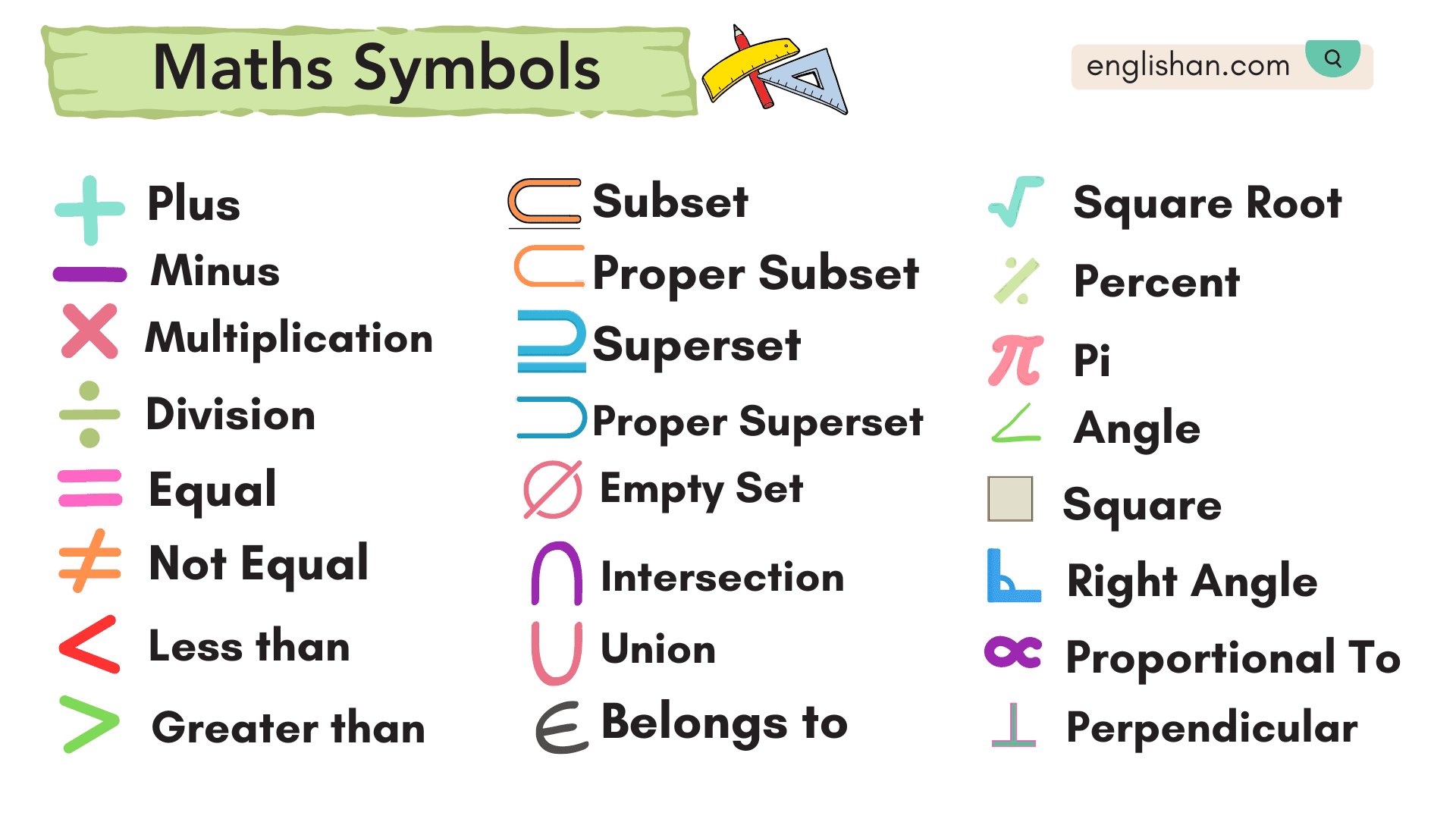
How to Use the Symbol in Writing and Math
Here are guidelines for correct usage in various contexts:
-
In mathematics or science: Use ≈ when you want to indicate that two expressions are nearly equal or one is an approximation of another. For example:
1.902×1031 kg≈1.9×1031 kg1.902 \times 10^{31} \, \text{kg} \approx 1.9 \times 10^{31} \, \text{kg}
Here the simplified form is used and the ≈ shows rounding.
-
In everyday writing: You might use ~ (tilde) before a number to convey “about”. For example: “~£50” means about fifty pounds. This is less formal than using ≈. Wikipedia
-
In technical reports: Be clear whether you are using rounding, estimated values or modelling assumptions. For example: “The sample size was n ≈ 1 000” makes it clear that 1 000 is approximate.
-
In geometry or advanced mathematics: Use ≅ for congruency or ≈ for approximate equality depending on the standard in your field. For example, triangles that are congruent might be written △ABC≅△DEF\triangle ABC ≅ \triangle DEF. mathematics-monster.com
How to Type or Insert the Symbol
To include the approximate equal symbol in your text you can follow these steps:
-
Windows (Alt code): Hold Alt then type 247 on the numeric keypad. Tech Pilipinas+1
-
HTML / Web: Use
≈,≈, or≈. styledtext.com -
Unicode: U+2248 for ≈. MathBz
-
Mac: Use the Character Viewer or insert via Unicode methods. (Often
Option + Xin certain editors) styledtext.com -
Copy-Paste: Simply copy the symbol “≈” from a reliable source and paste it where needed.
Practical Examples
To help illustrate, here are sample uses of the symbol in different settings:
-
In a scientific context:
c≈3.00×10⁸ m/sc \approx 3.00 \times 10^{8} \, \text{m/s}
This indicates the speed of light is about 300 000 000 m/s.
-
In a statistical report:
“The estimated population size is ≈ 12 500.”
This means the population is around 12 500, not exactly that number. -
In everyday writing:
“The project will take ~8 weeks.”
Here the tilde indicates roughly eight weeks.

Why Understanding the Symbol Matters
Several reasons highlight the importance of using the approximate symbol correctly:
-
Precision in communication: Using = when you mean ≈ can mislead readers into thinking values are exact when they are not.
-
Professionalism: In technical, academic or scientific writing showing that you understand and use proper notation reflects well on your work.
-
Clarity of intent: Readers will know you are giving an estimate. That sets appropriate expectations.
-
Data integrity: When dealing with measurements, models or simulations, acknowledging approximation helps avoid over-claiming accuracy.
Frequently Asked Questions (FAQ)
Q: Can I use the tilde (~) instead of ≈ in formal writing?
A: In informal contexts yes, but in formal mathematics or scientific writing it is smarter to use ≈ (or the symbol recommended by your style guide) because it conveys a clearer meaning of approximation. bavatuesdays.com
Q: What is the difference between ≈ and ≅?
A: ≈ means “approximately equal to”. ≅ often denotes “isomorphic”, “is congruent to” or “approximately equal in a more structured sense” (especially in geometry). Use ≅ when discussing shapes or structures rather than simple numeric rounding. Enviro Institute+1
Q: Is ≈ used only in mathematics?
A: No. While it is common in mathematics and science, the concept of approximation appears in everyday contexts too (e.g., budgets, measurements, estimates). The symbol can be used in those contexts provided the audience understands its meaning.
Common Mistakes to Avoid
-
Using = instead of ≈ when values are not exact. This can mislead.
-
Using the wrong symbol (e.g., using ≅ for numeric rounding when the audience might interpret it as congruency).
-
Failing to provide context for the approximation (e.g., state how close the estimate is or indicate it is rounded).
-
Enclosing the symbol unnecessarily between units or text in a way that obscures meaning (e.g., “~$500” is fine informally but in formal writing you might write “approximately $500”).
-
Ignoring style guidelines in academic contexts—some journals or fields specify how approximation notation should be used.
Summary and Key Takeaways
The approximately equal symbol (≈) is a small symbol with big importance. It allows us to express quantity, value or relationships that we know are close but not exact.
-
Use ≈ when you want to show approximation.
-
Use = when you have exact equality.
-
Use ≅ in geometry or structured equivalence contexts when appropriate.
-
Use ~ informally to indicate “about” or “around”.
-
Make sure you understand how to type or insert the symbol correctly, especially in formal documents or web content.
-
Explain or frame the context of approximation for clarity—readers appreciate transparency about how precise (or imprecise) your numbers are.
By using the symbol thoughtfully, you enhance accuracy, clarity and professional tone in your writing or technical work.