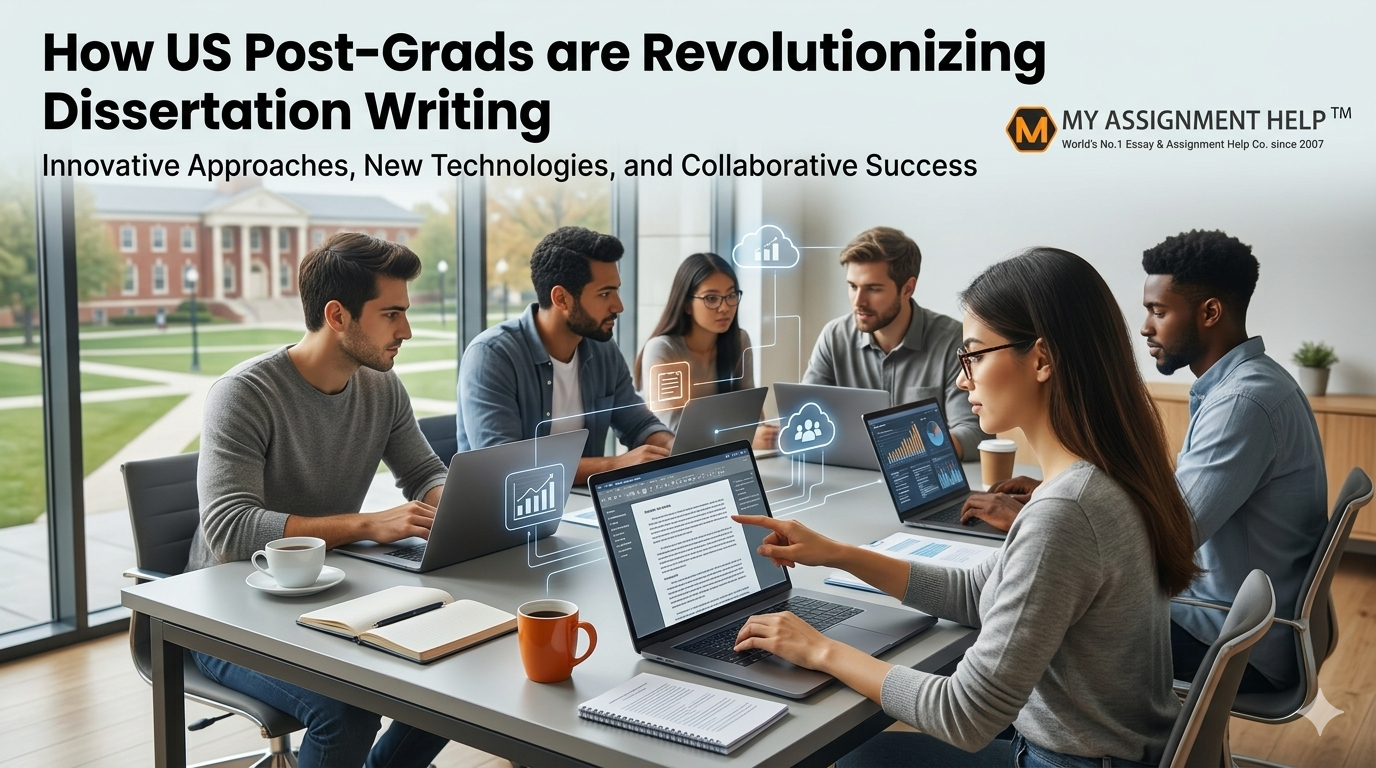
The traditional image of a doctoral candidate—hunched over a mountain of physical library books in a dimly lit carrel—is rapidly fading into history. Across Ivy League campuses and state universities alike, a digital revolution is fundamentally altering the DNA of the American dissertation. In an era where the average PhD completion time in the United States remains between five and seven years, post-graduate students are no longer just “writing” their theses; they are architecting them using an advanced suite of digital tools.
From AI-driven literature mapping to cloud-based collaborative frameworks, the modern scholar is leveraging technology to overcome the “blank page syndrome” and the logistical nightmares of data management. This shift isn’t just about speed—it’s about enhancing the rigor, reach, and reproducibility of high-level academic research.
The Architecture of Modern Research
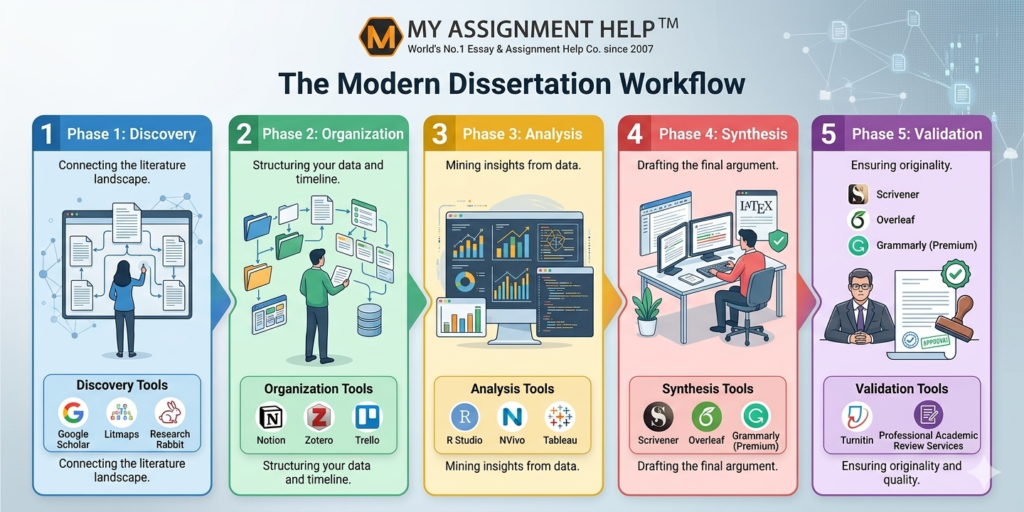
The journey begins long before the first word is typed. US post-grads are increasingly turning to tools like Litmaps and Connected Papers to visualize the citation galaxy. Instead of a linear search, these tools allow researchers to see the “progenitor” papers of a theory and how they branched into contemporary studies.
Managing these vast libraries has also evolved. While Zotero and Mendeley remain staples, the integration of these tools into cloud-enabled writing environments allows for seamless citation. For many students tackling complex subjects, seeking professional dissertation help has become a strategic move to ensure their bibliographies and structural formatting meet the stringent requirements of US Graduate Schools. By offloading the mechanical burdens of formatting, scholars can focus on their original contribution to the field.
Key Digital Pillars of the 21st-Century Dissertation
1. Advanced Data Analysis and Visualization
Data is the heartbeat of the dissertation. In STEM and Social Science departments across the US, Python and R have moved from “nice-to-have” skills to essential requirements. Tools like NVivo for qualitative coding and SPSS for quantitative analysis allow students to process thousands of data points that would have taken months to categorize manually just a decade ago.
2. Collaborative Writing and Version Control
The days of “Dissertation_Final_v2_REAL_FINAL.docx” are over. Post-grads are now using Overleaf (for LaTeX users) or Google Workspace with advanced versioning. This allows for real-time feedback from committee members located in different time zones. Furthermore, many students utilize assignment help services to refine their methodology sections or to ensure their language meets the high academic standards expected by domestic review boards.
3. Productivity and “Second Brain” Systems
The “Second Brain” methodology, popularized by Tiago Forte, has seen a massive surge in the US academic community. Apps like Notion, Obsidian, and Roam Research allow students to build a bi-directional web of notes. A thought recorded during a 2:00 AM epiphany can be instantly linked to a specific primary source, ensuring that no insight is lost in the 80,000-word journey.
Data-Driven Insights: Does Tech Improve Outcomes?
Recent surveys indicate a strong correlation between digital literacy and completion rates. According to data from the Council of Graduate Schools, student support services—including digital resource access—are critical in reducing “All But Dissertation” (ABD) attrition rates. In the US, where the cost of an extra year of tuition can exceed $30,000, the efficiency provided by these tools is not just academic; it is a financial necessity.
Furthermore, a 2023 study published in Journal of Higher Education Technology noted that students using cloud-based organization tools reported 34% lower stress levels regarding “data loss” and “document management” compared to those using local-only storage.
Key Takeaways
- Mapping the Field: Use visualization tools to find “hidden” literature and gaps in current research.
- Centralize Knowledge: Implement a “Second Brain” system (Notion/Obsidian) to prevent fragmented note-taking.
- Automate Formatting: Utilize citation managers early to avoid the “Style Guide Nightmare” in the final weeks.
- Leverage Support: Don’t hesitate to use professional editing and assignment services to ensure the final product is polished and compliant with US standards.
- Focus on Security: Always use encrypted cloud backups; a dissertation is too valuable to be stored on a single hard drive.
FAQ Section
Q: Are AI tools allowed in US dissertation writing?
A: Most US universities allow AI for brainstorming or grammar checks, but strict policies exist against using AI to generate original research or findings. Always consult your specific department’s handbook.
Q: What is the most recommended citation style for US dissertations?
A: It depends on the field. APA 7th Edition is standard for Social Sciences, MLA for Humanities, and Chicago for History/Business. Digital tools like Zotero can switch between these instantly.
Q: How do digital tools help with the “Defense” phase?
A: Tools like Canva and Prezi help students create high-impact visual presentations of their data, making complex findings more accessible to the committee.
Q: Can I use online services for my dissertation?
A: Yes. Many students use professional academic services for proofreading, formatting, and structural guidance to ensure their work meets the rigors of PhD-level scrutiny.
About the Author: Dr. Aris Miller
Senior Academic Consultant at MyAssignmentHelp Dr. Aris Miller holds a PhD in Educational Technology and has over 12 years of experience in the US higher education sector. Having mentored over 500 doctoral candidates through the complexities of thesis development, Dr. Miller specializes in integrating digital workflows with traditional research methodologies to help students achieve their academic goals efficiently.
References:
- Council of Graduate Schools (2023). PhD Completion and Attrition: Policies and Practices.
- Journal of Higher Education Technology (2023). The Impact of Cloud-Computing on Post-Graduate Research.
- National Center for Education Statistics (NCES). Trends in Graduate Education (2024 Report).