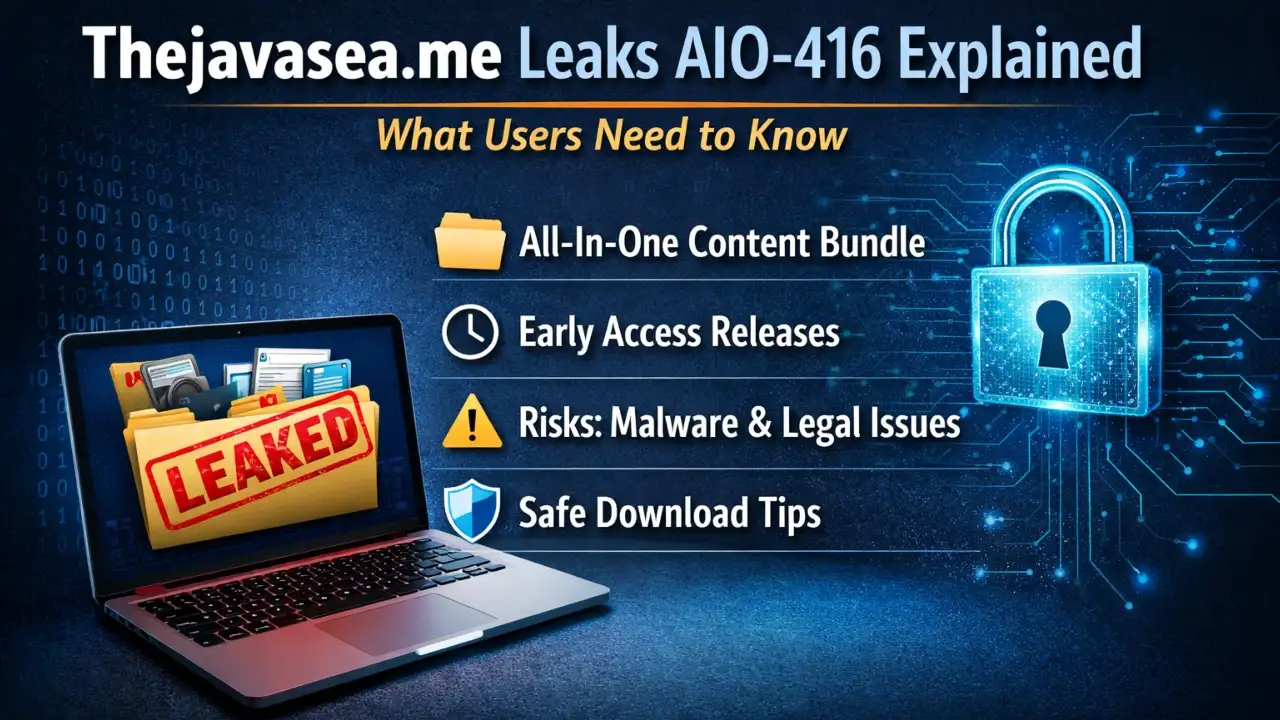
In today’s digital world, news about data travels fast. Recently, many people have been searching for thejavasea.me leaks aio-416 to understand what happened. This situation involves a platform that hosts various files, and “aio-416” refers to a specific collection of data. When we talk about leaks, we are usually talking about information that was meant to be private but became public. This can include anything from login details to personal documents. It is important to look at these events with a clear head.
Understanding these terms helps you stay safe online. The internet is a giant library, but sometimes books are taken without permission. When a site like thejavasea.me leaks aio-416, it serves as a wake-up call for everyone. We need to be careful about where we share our data and what sites we visit. Staying informed is the first step in protecting your digital life from unwanted eyes.
Data Overview Table
| Feature | Description | Importance |
| Source Name | thejavasea.me | The platform where the files were hosted. |
| File Identifier | aio-416 | The specific bundle of data being discussed. |
| Risk Level | High | Potential for personal info exposure. |
| Safety Step | Change Passwords | Essential for protecting your accounts. |
Why People are Searching for This Leak
The main reason for the buzz around thejavasea.me leaks aio-416 is curiosity and concern. People want to know if their personal details are part of the “AIO” (All In One) pack. Usually, these packs contain a mix of different types of data gathered from various places. Because the internet is so connected, a leak in one place can sometimes affect people in another. This makes users feel uneasy about their privacy.
When a specific code like “aio-416” appears, it acts like a label for a digital box. People search for it to see what is inside that box. Many tech experts and everyday users are trying to figure out if this information is new or just old data being reshared. Knowing the truth helps people decide if they need to update their security settings or if they can breathe a sigh of relief.
How to Stay Safe Online Right Now
If you are worried about thejavasea.me leaks aio-416, there are simple steps you can take. First, do not go looking for the leak itself. Visiting sites that host leaked data can actually be dangerous. These sites often have viruses or “malware” that can infect your computer. Instead of hunting for the data, focus on your own security. Changing your passwords is a great way to start fresh and keep hackers away.
Another great tip is to use “Two-Factor Authentication” or 2FA. This is a fancy way of saying you need two keys to open your digital door. Usually, this is your password plus a code sent to your phone. Even if someone finds your info in thejavasea.me leaks aio-416, they won’t be able to get into your accounts without that second code. It is one of the best ways to stay safe.
The Role of “AIO” Packs in Data Circles
The term “AIO” stands for “All In One.” In the world of data, this means a large folder that has many different things inside. Regarding thejavasea.me leaks aio-416, the “416” is likely just a version number. Think of it like a magazine issue. Hackers or data collectors bundle these together to make them easier to share. These packs can be very large and contain thousands of files from different sources.
Sometimes, these packs are used by researchers to find security holes. Other times, they are used by bad actors. Because thejavasea.me leaks aio-416 is a public topic, it means the bundle is being widely discussed. It is a reminder that once information is put on the internet, it can be very hard to take it back. This is why we must be very picky about the apps and websites we use.
Why Privacy Matters for Everyone
Privacy isn’t just for people with secrets; it is for everyone. When we talk about thejavasea.me leaks aio-416, we are talking about the right to keep our lives private. If your email or photos end up in a leak, it can feel like a violation. Your digital footprint is like your shadow—it follows you everywhere. Protecting it ensures that your personal identity stays yours and yours alone.
When a leak like thejavasea.me leaks aio-416 happens, it reminds us that companies have a big responsibility. They need to guard our data like gold. If they fail, it can lead to identity theft or scams. By supporting companies that value privacy and being careful ourselves, we can build a safer internet for children, students, and adults alike.
Spotting Fake Websites and Scams
When a big leak like thejavasea.me leaks aio-416 hits the news, scammers try to take advantage. They might make fake websites that look like the original site. They might promise to show you the “leaked files” if you click a link or download a file. Never do this! These links are often traps designed to steal even more of your information. This is called “phishing.”
Always look at the website address carefully. If it looks strange or has weird spelling, stay away. To stay safe from thejavasea.me leaks aio-416 scams, only trust well-known news sites or official security experts. If a deal or a download seems too good to be true, it probably is. Being a little bit skeptical can save you a lot of trouble in the long run.
What to Do If Your Info is Leaked
If you ever find out that your data was in thejavasea.me leaks aio-416, don’t panic. The first thing to do is stay calm. Start by making a list of your most important accounts, like your email and bank. Go through them one by one and change the passwords. Make sure each password is different. If you use the same password everywhere, one leak can ruin all your accounts.
You can also use tools like “Have I Been Pwned.” These are trusted websites that tell you if your email has been part of a known leak. While they might not have thejavasea.me leaks aio-416 indexed immediately, they are great for general safety. Keeping a close eye on your bank statements for any weird charges is also a smart move after a data event.
Simple Habits for Better Security
You don’t need to be a computer genius to be safe. To protect yourself from things like thejavasea.me leaks aio-416, start simple habits. For example, update your phone and computer software whenever a new version comes out. These updates often include “patches” that fix the very holes that hackers use to steal data. It is like fixing a broken lock on your front door.
Another good habit is to delete accounts you don’t use anymore. If you have an old social media page from five years ago, close it. The less data you have floating around out there, the less likely it is to end up in thejavasea.me leaks aio-416. Think of it as spring cleaning for your digital life. It makes you a smaller target for hackers and keeps your info tidy.
The Future of Digital Privacy
As technology grows, leaks like thejavasea.me leaks aio-416 might become more common. However, the tools to protect us are also getting better. New laws are being made to punish companies that don’t take care of our data. This is good news for users. We are moving toward a world where your data is treated with more respect. But until then, the power is in your hands.
By learning about thejavasea.me leaks aio-416, you are already ahead of the curve. Education is the best defense. The more people know how to spot a scam or secure an account, the harder it is for leaks to cause real damage. We can all work together to share tips and keep our friends and family safe from digital threats.
Final Thoughts on Online Safety
The story of thejavasea.me leaks aio-416 is a lesson in caution. It teaches us that the internet is a shared space where risks exist. But these risks shouldn’t stop us from enjoying the web. By being smart, using strong passwords, and staying away from fishy sites, we can browse with confidence. Your personal information is valuable, so treat it that way every single day.
Remember that you are the boss of your digital world. Whether it’s thejavasea.me leaks aio-416 or the next big headline, your security habits are what matter most. Keep learning, keep updating, and keep your private life private. A safe internet starts with a single smart user, and that user is you!
Conclusion
In summary, thejavasea.me leaks aio-416 is a significant topic for anyone interested in data safety. While leaks are scary, they are also an opportunity to improve our own habits. By following the tips in this guide, you can stay one step ahead of potential threats. Don’t let the technical names confuse you—it all boils down to keeping your digital doors locked tight. Stay safe and stay informed!
Frequently Asked Questions (FAQs)
1. What exactly is thejavasea.me leaks aio-416? It is a collection of files, often called an “All In One” pack, that was made available on the site thejavasea.me. It usually contains various types of data that may have been gathered from different online sources.
2. Is it safe to visit the website mentioned? It is generally not recommended to visit sites that host leaked data. These sites can contain malware, trackers, or other security risks that could harm your device or steal your information.
3. How do I know if my data is in thejavasea.me leaks aio-416? There is no easy way to check without visiting risky sites. The best approach is to assume your data might be at risk and change your passwords and enable two-factor authentication on all your important accounts.
4. What does “AIO” mean in these leaks? “AIO” stands for “All In One.” It is a term used by people who share data to describe a large file that contains many different smaller files or datasets bundled together for convenience.
5. Can I get in trouble for looking at thejavasea.me leaks aio-416? While simply reading about it is fine, downloading or sharing leaked data can sometimes lead to legal issues or security risks. It is always best to stay away from the actual files and focus on your own security.
6. What is the most important thing to do after a leak happens? The most important step is to change your passwords, especially if you use the same one for multiple sites. Using a password manager can help you create and remember strong, unique passwords for every account.