Introduction: A Symbol of Happiness in Every Bite
Few things in the world can match the universal delight of an ice cream cone. Whether you are a child savoring your first swirl or an adult enjoying a quiet afternoon treat, the ice cream cone remains one of life’s sweetest pleasures. Its magic lies not only in its taste but also in its design — a perfect harmony of texture, temperature, and creativity.
In this article, we will explore the full story of the ice cream cone: how it began, evolved, spread across the world, and became a global symbol of indulgence and happiness. We will also look at its cultural significance, different types, innovations, and why this humble dessert remains timeless in a world of changing food trends.
The Origins of the Ice Cream Cone
From Ancient Desserts to Modern Delight
While ice cream itself dates back thousands of years, the concept of serving it in an edible cone is relatively modern. Ancient Persians were known to mix snow with fruits and honey. Later, in Europe, frozen creams and sorbets became a symbol of royalty and luxury.
The idea of combining frozen cream with a crisp edible shell came to life during the late 19th and early 20th centuries. Food historians trace the modern ice cream cone to several inventors who experimented with wafers and rolled pastries to serve ice cream neatly and portably.
The 1904 World’s Fair and the Birth of a Classic
The most popular story credits the ice cream cone’s rise to fame to the 1904 World’s Fair in St. Louis, Missouri. According to legend, an ice cream vendor ran out of dishes. A nearby waffle maker, Ernest Hamwi, came to the rescue by rolling his waffles into cone shapes. This clever collaboration led to a sensation, and soon the “ice cream cone” became a global phenomenon.
Although multiple vendors claimed the invention, the fair undeniably marked the turning point that made cones a staple of ice cream culture.
The Evolution of the Ice Cream Cone
The Waffle Cone
The classic golden-brown waffle cone — crunchy perfection.
The waffle cone remains one of the most popular versions worldwide. Made from a light batter cooked in patterned irons, it offers a delicious crunch that complements the creamy smoothness of ice cream. Its flavor, slightly buttery and sweet, enhances the overall experience.
The Sugar Cone
Slightly thicker and sturdier than the waffle cone, the sugar cone became famous for its crisp snap and longer shelf life. Its darker color and denser texture make it ideal for heavier scoops and multiple flavors.
The Cake Cone
Often served in diners or fast-food parlors, the cake cone is lighter and more neutral in taste. Its airy texture allows the ice cream to shine as the main flavor. Children often favor cake cones because of their soft crunch and simple sweetness.
The Chocolate-Dipped Cone
A modern twist loved by all ages, the chocolate-dipped cone involves coating the rim (or the entire cone) with melted chocolate, sometimes finished with nuts or sprinkles. It adds a second layer of flavor and a satisfying texture contrast.
Cultural Significance Around the World
A Universal Language of Joy
Wherever you travel, the ice cream cone brings smiles. From street vendors in Italy serving gelato to children in Japan enjoying matcha soft serve, the cone has transcended borders. It has become a universal sign of leisure, comfort, and happiness.
In the United States, cones are tied to nostalgia — summer fairs, childhood memories, and road trips. In Italy, gelaterias use cones to display craftsmanship and flavor artistry. In Asia, cones are often paired with unique flavors such as black sesame, lychee, or taro.
A Symbol of Celebration
Ice cream cones often accompany moments of celebration: birthdays, vacations, festivals, or simple family walks. They represent the idea that happiness can come in small, shareable forms.
The Science of the Perfect Ice Cream Cone
Creating the perfect cone requires both art and science. The texture, temperature, and timing all influence the experience.
-
Balance of Temperature: The cone must remain crisp while holding cold ice cream. That’s why it is served fresh and stored in dry conditions.
-
Texture Harmony: The slight crunch of the cone contrasts with the creamy ice cream. This sensory contrast is what makes each bite satisfying.
-
Flavor Pairing: A good cone complements the ice cream flavor. For example, nutty or chocolate cones pair beautifully with vanilla, while plain cake cones let fruit flavors shine.
Food technologists and chefs constantly test batters, sugar levels, and moisture content to maintain the ideal crunch and durability.
Innovations in the Modern Era
Gourmet Cones
The rise of gourmet and artisanal desserts has inspired chefs to experiment with cone designs. Today you can find cones made with charcoal, red velvet, matcha, or cookie dough. Some are even gluten-free or vegan to meet dietary preferences.
Soft Serve Revolution
Soft serve and cones — the perfect partnership of smooth and crisp.
Soft serve machines changed how ice cream is dispensed, allowing smoother textures and faster service. Paired with cones, soft serve became a quick, affordable pleasure around the world.
Sustainable and Edible Packaging
As eco-friendly trends rise, the cone itself stands as a sustainable hero. It leaves no waste behind, unlike cups or plastic spoons. Some innovators are now creating cones made of alternative grains, oats, or even plant fibers that add nutrition and reduce environmental impact.
The Ice Cream Cone in Pop Culture
The cone is more than food — it’s an icon. From cartoons to advertisements, it symbolizes joy, childhood, and indulgence. Brands like Baskin-Robbins and Dairy Queen built entire experiences around the cone’s fun appeal.
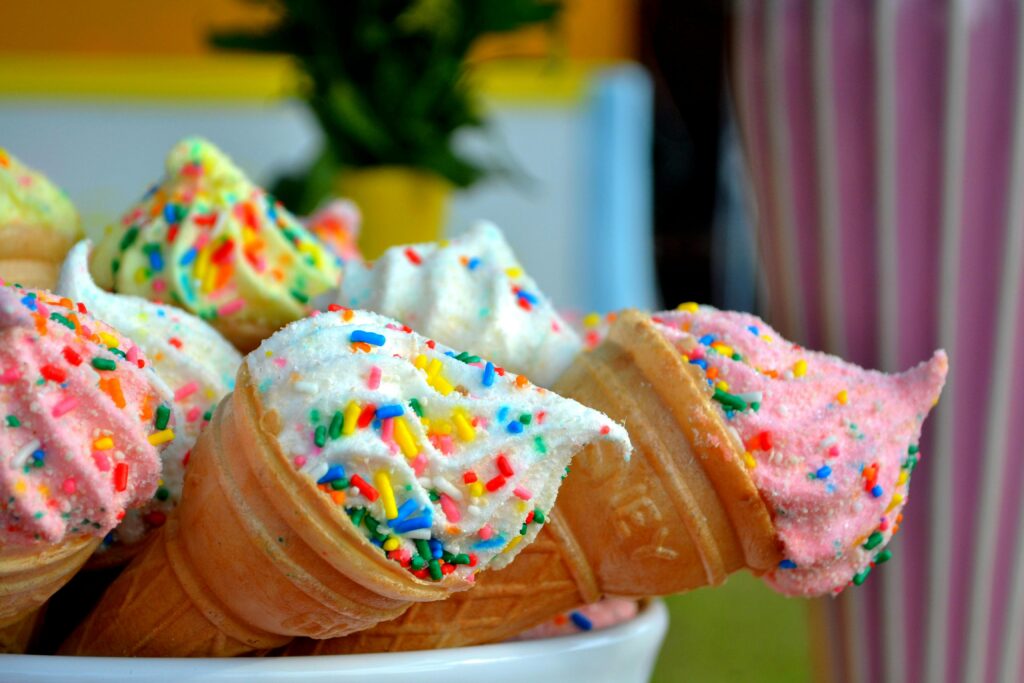
Artists use the cone as a visual metaphor for innocence, fleeting moments, or creative imagination. On social media, colorful cones covered in sprinkles dominate summer feeds, reminding everyone that happiness often starts with something sweet and simple.
Health and Nutrition: Enjoying in Balance
While an ice cream cone is a treat, it can fit into a balanced lifestyle when enjoyed in moderation. A standard cone adds roughly 50–80 calories, depending on size and ingredients. Choosing fruit-based ice creams, low-sugar varieties, or sorbets can make the dessert lighter.
The psychological benefit, however, goes beyond numbers. Sharing a cone with friends or family often brings joy, relaxation, and comfort — experiences that contribute positively to mental well-being.
The Business of Ice Cream Cones
Global Industry
The global ice cream market exceeds hundreds of billions of dollars annually, and cones play a vital role in that success. Cone manufacturers produce billions of units each year, supplying parlors, restaurants, and supermarkets.
Local Artisans and Street Vendors
In every country, small vendors bring creativity to the classic cone. Homemade waffle cones or seasonal flavor pairings turn a simple snack into a local specialty. For example:
-
In Italy, hand-rolled waffle cones are often filled with gelato and topped with hazelnut cream.
-
In Japan, Taiyaki cones shaped like fish hold soft serve for a whimsical twist.
-
In the Middle East, cones sometimes hold rose or pistachio-flavored ice cream.
Each culture adds its own signature touch, proving the cone’s universal adaptability.
How to Make Ice Cream Cones at Home
For anyone who loves to cook, making cones at home is a rewarding experience. Here’s a simplified version:
Ingredients:
-
2 eggs
-
½ cup sugar
-
¼ cup melted butter
-
½ cup flour
-
2 tablespoons milk
-
1 teaspoon vanilla extract
Method:
-
Whisk eggs and sugar until light and fluffy.
-
Add butter, milk, vanilla, and flour. Mix until smooth.
-
Pour a small amount of batter on a hot non-stick pan or waffle cone maker.
-
Cook for 2 minutes until golden.
-
Quickly roll into a cone shape while warm.
-
Let it cool and harden before filling with ice cream.
Homemade cones bring a delightful freshness and personal touch that store-bought versions can’t match.
Fun Facts About Ice Cream Cones
-
The first patent for an ice cream cone was filed in 1903 by Italo Marchiony in New York.
-
The world’s largest ice cream cone was made in Italy in 2015, measuring over 9 feet tall.
-
Cones were once called “cornets”, derived from the French word for “little horn.”
-
July 23 is celebrated as National Ice Cream Cone Day in the United States.
-
Waffle cones became mass-produced after specialized rolling machines were invented in the 1920s.
Why the Ice Cream Cone Endures
The enduring popularity of the ice cream cone lies in its simplicity. It combines practicality with pure pleasure — portable, edible, and endlessly customizable. Every lick takes you back to summer memories and carefree days.
The cone’s genius design merges taste and texture, while its playful presentation continues to inspire creativity. From gourmet restaurants to roadside stalls, the ice cream cone remains a shared language of happiness.
Conclusion: A Timeless Treat
The ice cream cone is more than a dessert; it is a piece of cultural history, a work of culinary design, and a reminder that small joys can have lasting impact. Its journey from the 1904 World’s Fair to today’s global stage is a story of innovation, passion, and delight.
Each cone carries a bit of nostalgia and a lot of flavor — proof that the simplest things often bring the greatest happiness. Whether topped with vanilla, chocolate, or your own creative swirl, the ice cream cone continues to represent joy that never melts away.