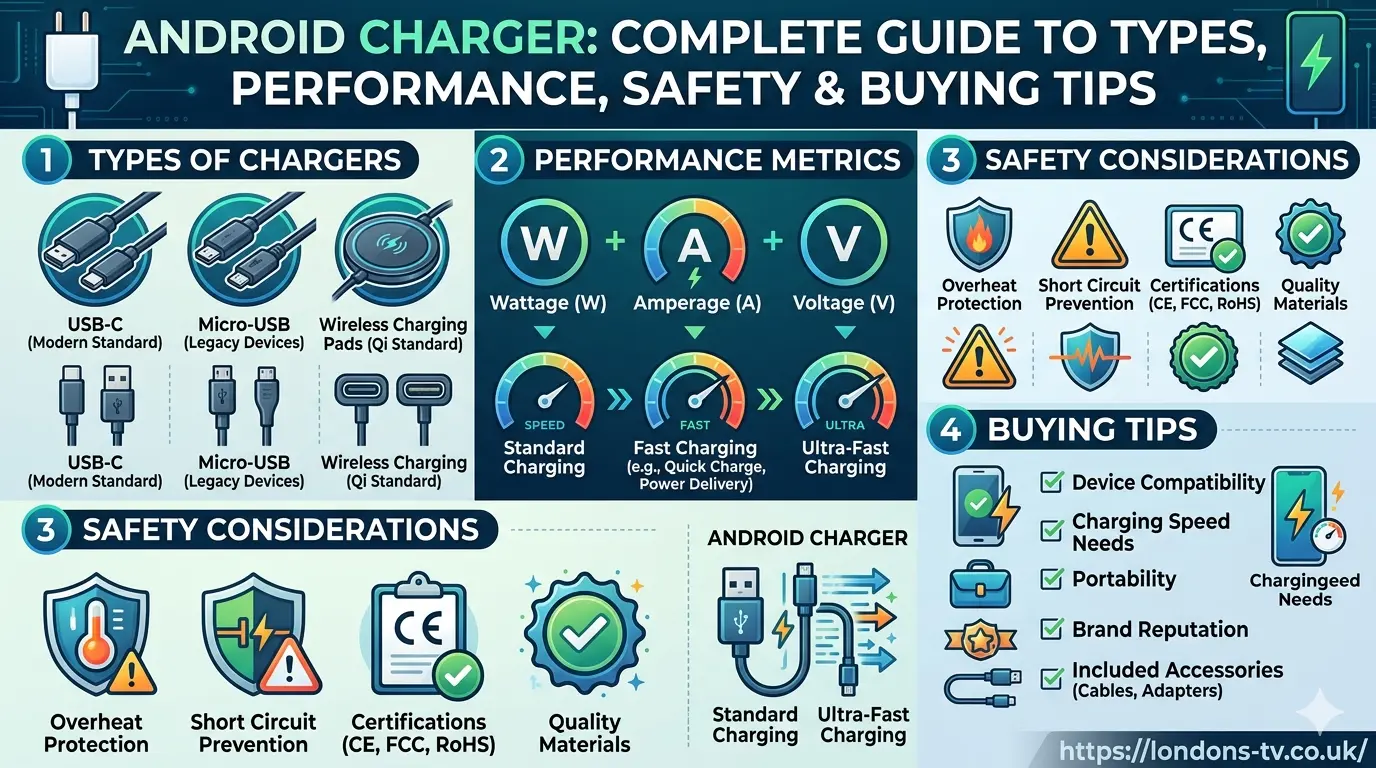
Choosing the right android charger matters more today than ever. Fast charging phones, power-hungry apps, and daily usage demand a charger that delivers efficiency, long-term reliability, and battery-friendly performance. Many users unknowingly use the wrong charger and face slow charging, overheating, or shortened battery lifespan. Therefore, understanding specifications, charger types, and safe charging practices becomes essential.
Understanding What an Android Charger Really Does
An android charger converts AC wall power into usable DC energy that charges your device battery. It relies on voltage, current, wattage, and cable compatibility. Most modern Android phones support fast charging standards like USB-Power Delivery or Qualcomm Quick Charge, enabling them to charge far quicker than older methods. Moreover, charging remains stable when the charger matches your phone’s power requirements.
Types of Android Chargers and How They Compare
Different chargers offer different performance levels. Wall chargers are most common because they provide direct and stable power. Car chargers ensure power during travel. Power banks remain useful outdoors. Wireless chargers offer convenience through Qi technology. Multi-port chargers efficiently power several devices at once, saving time and maximizing output distribution.
Fast Charging Standards in Modern Android Chargers
Meanwhile, fast charging relies on enhanced wattage output. Qualcomm Quick Charge boosts speed on Snapdragon-powered phones. USB-PD works across many brands, delivering dynamic power negotiation for safety. Adaptive Fast Charging helps Samsung models manage heat effectively. SuperVOOC, Warp, and HyperCharge push charging speeds even higher using custom voltage and current control.
Key Features to Look for in an Android Charger
Right charger selection depends on several performance indicators. Wattage determines speed, while amperage controls power flow. Durable cables prevent energy loss and maintain stable current. Safety certifications protect against short circuits, voltage spikes and overheating. Additionally, a charger with built-in smart chip technology automatically adjusts power for battery health.
Difference Between Original and Third-Party Android Chargers
Branded chargers usually provide optimized output, strong build, and accurate voltage control. Aftermarket chargers vary widely in quality, though many reputable companies create safe and fast chargers meeting global safety standards. However, low-quality chargers may deliver unstable current causing heat, slow charging or long-term cell degradation.
How Charging Wattage Impacts Speed and Battery Health
Wattage equals volts multiplied by amps. When wattage aligns with device limits, charging becomes efficient and smooth. Higher wattage supports rapid charging cycles without stressing battery cells. Lower wattage slows the process though remains safe for overnight usage. However, mismatched wattage leads to slow performance or possible heat accumulation.
How to Identify a Good Quality Android Charger
Strong insulation, secure USB ports, copper-core wires and thick cable sheathing signal durability. Printed specifications should clearly mention voltage and amperage ratings. Fast charging logos indicate supported technologies. Moreover, overheating reduction vents, fire-resistant material and reinforced connectors add long-term resilience.
Android Charger Cable Types and Which One to Choose
Micro USB cables remain common for older phones, though lack speed. USB-C supports higher currents, faster charging and quicker data transfer. Type-C also reverses orientation making it easy to plug in. Therefore, most modern chargers include USB-C output for maximum compatibility and efficiency.
Why Wireless Android Charging is Popular
Qi wireless chargers power devices without direct contact. Coils inside the charger and phone create electromagnetic induction transferring energy wirelessly. Convenience drives popularity because cables never tangle. Charging pads suit desks, while stands allow visibility during charging. However, wireless speeds rarely exceed cable fast-charging performance.
Fast Charging vs Normal Charging: Which is Better
Fast charging saves time especially during busy routines. Normal charging protects long-term battery endurance due to lower thermal stress. Many users switch between both depending on daily need. Selecting fast charging helps when time is limited, whereas slow charging supports overnight recovery and longevity.
Signs Your Android Charger Needs Replacement
Slow charging duration, cable looseness, heat buildup and intermittent connection show charger wear. Frayed wires and exposed metal pose safety risks. Sometimes the phone displays charging errors because voltage fluctuates. Replacement becomes essential once these signals appear. Good maintenance ensures consistent battery performance.
How Temperature Affects Charging Speed
High temperature reduces charging efficiency and battery lifespan. Phones automatically throttle power intake when heated. Using chargers in cool environments maintains smooth current flow. Even phone cases sometimes trap heat. Removing case during charging improves airflow, allowing power delivery without thermal buildup.
How to Charge Android Devices Safely
Safe charging avoids cheap uncertified chargers. Always place devices on firm surfaces to allow dissipation. Avoid using phone during charging when heat rises. Unplug once charged to reduce stress cycles. Additionally, using original or premium third-party accessories ensures balanced current and cell protection.
Common Myths About Android Chargers
People often assume higher watt equals damage, but controlled fast-charging prevents harm. Many think overnight charging ruins battery, yet modern power management reduces impact. Users believe thicker cables are faster though conductor quality matters more. Not all wireless chargers waste energy because modern Qi designs improve efficiency.
How to Extend the Lifespan of Your Android Charger
Coiling cables loosely prevents breakage at joints. Keeping chargers dry and dust-free maintains internal integrity. Pulling plugs from the head rather than the cord avoids strain. Storing chargers in protective pouches reduces bending. Moreover, using surge protectors prevents voltage fluctuations from harming the adapter.
Recommended Power Ratings for Different Devices
Small smartphones charge efficiently around 15W to 25W. Mid-range models benefit from 30W to 45W fast charging. Flagships often support 65W or higher, reducing full-charge time drastically. Tablets demand more wattage due to larger batteries, often requiring 30W minimum for stable speed.
Environmental Impact of Android Chargers
E-waste rises when users frequently replace poor-quality chargers. Durable materials reduce electronic waste output. Many manufacturers now develop recyclable housings and low-heat circuit boards for sustainability. Buyers selecting long-lasting chargers support eco-friendly consumption habits, reducing future disposal and promoting greener technology usage.
Structured Data and Multimedia Optimization for Android Charger Buying Guides
Content describing android charger becomes more discoverable with labeled images, alt text and metadata. Product diagrams, voltage charts and cable comparison tables help clarity. Meanwhile, structured data enhances indexability for AI, mobile apps and voice assistants. Users benefit from simplified readability and stronger product decision awareness.
How to Choose the Best Android Charger for Your Device
Start by matching wattage to manufacturer recommendations. Select USB-C PD if supported for faster output. Consider durability, cable length and material strength. Multiple-port adapters help users charge several gadgets at once. Furthermore, invest in certified standards ensuring long-term safety and device longevity.
User-Friendly Charging Habits for Better Experience
Charge phones before battery dips below 10%. Stop charging frequently above 90%. Partial charges improve cycle count and slow chemical aging. Avoid gaming during charging because performance and battery generate heat rapidly. Gentle usage patterns prolong health and stabilize runtime duration.
Future Trends in Android Charging Technology
GaN chargers grow popular because they run cooler and deliver high output in compact size. Wireless magnetic charging advances quickly with higher transfer efficiency. Soon, over-air charging innovations may eliminate cables completely. Future Android ecosystems will integrate faster processors, better thermal management and adaptive current intelligence.
Conclusion
Right android charger selection ensures fast charging, battery care and long-term reliability. With correct wattage, cable quality and certified products, users experience smoother power flow and shorter wait times. Therefore, choose wisely and upgrade your charging setup for lasting performance, safety and convenience.
FAQs
- Which android charger is best for fast charging?
USB-C PD or Qualcomm Quick Charge adapters usually provide faster charging support. - Can I use any charger for my Android device?
Yes, but matching wattage and certifications ensures safety and efficiency. - Do fast chargers harm battery health?
No, most fast chargers regulate heat and power to protect battery cells. - Is wireless charging slower than cable charging?
Usually yes, because energy transfer efficiency is lower than wired fast charging. - How can I make my android charger last longer?
Store safely, avoid bending cables and unplug from the head to reduce strain.